|
WEDNESDAY IN THE WORD DEVOTIONAL – Sept. 9, 2026
“WHEN SCRIPTURE REACHES DEEPER”
Romans 8:26-39 (NRSV)
In difficult seasons, Scripture can become more than a quick answer to hard circumstances. A verse applied too quickly can feel like a band-aid on a cut from a chipped glass, helpful for a moment but easily washed away. We need Scripture to reach deeper than the surface.
We need something deeper and more lasting. Instead of applying Scripture only to the wounded place, we are invited to embody it. Embodiment is a whole life encounter with God’s word, one that shapes how we pray, wait, suffer, hope, and live. My hope is that this message becomes part of our living. The text in Romans 8:26-39 contains one of those “application” verses: “All things work together for the good of those who love the Lord, who are called according to God’s purposes.” v.28.
Romans 8:28 is often treated as an “application” verse: “All things work together for good for those who love God, who are called according to his purpose.” Yet, this promise must be held carefully. Painful things do happen, and God is not simply arranging every hardship as though suffering itself were good. The verse holds two truths together: awlful things happen and still God remains active for us in the midst of them.
Romans 8 is full of trouble, even “good trouble.” It contains familiar words that people of faith often repeat with confidence. But Paul calls us to more than reciting verses. He begins by reminding us of our weakness: “The Spirit helps us in our weakness; for we do not know how to pray as we ought, but that very Spirit intercedes with sighs too deep for words.” God searches us, knows us, and gives the Spirit room to pray within us when we have no words. Sometimes faith means silence, longing, waiting, and living inside the promise God provides.
Life is hard, often frustrating, and sometimes almost unbearable. Paul’s words suggest that the Roman believers knew deep and lasting suffering. Verse 35 names the worst of human trouble: hardship, distress, persecution, famine, nakedness, peril, and sword. Quoting Scripture in verse 36 does not remove the suffering. So how do we move from present hardship to the promise that “we are more than conquerors through Him who loves us”?
Like the Apostle Paul, we ask who can separate us from Christ’s love. Then we begin naming the “what”: hardship, fear, loss, injustice, grief, and every power that seems stronger than we are. But in the end, no creature and no circumstances can separate us from the love of the Creator revealed in Jesus Christ.
We cannot place temporary fixes on the brokenness of creation. Our wholeness in faith and our connection to God invite us toward deeper, more lasting trust. We keep going, we examine how we are living, and we seek God’s guidance in the midst of it all. Our comfort is not that God plans tragedy or wills our suffering. Our comfort is that God is with us in all things, and nothing can separate us from God’s love. Thankfully, that is enough—not because we simply say it, but because it becomes embodied in us. “For I am convinced that neither death, nor ife, nor angels, nor rulers, nor things to come, nor powers, nor height, nor depth, nor anything else in all creation, will be able to separate us from the love of God in Jesus Christ our Lord.” (Romans 8:39)
Amen!
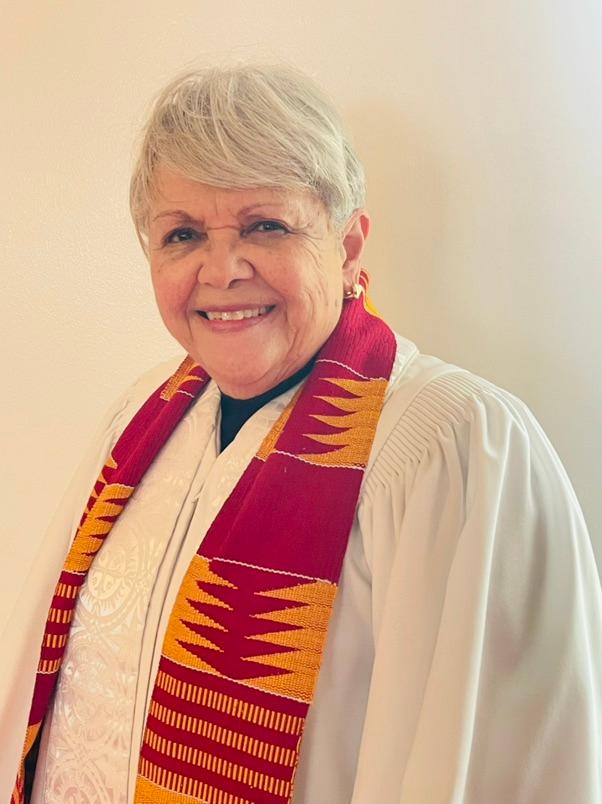
REV. CAROLE M. MOORE, ASSISTANT PASTOR
|